Showing posts with label Harry Potter. Show all posts

Thursday, July 24, 2008

Fan Fiction for Beginners (or for snobs)

Years back (in June 2006, actually), I wrote a piece on my own blog called The Snape Theory, finally, wherein I correctly asserted before it was revealed at the end of the series that Snape was a double agent working for good, and that it was for the love of Harry's mother Lily.

Of course, getting the Snape Theory right by the end of the fifth Harry Potter (The Order of the Phoenix) was hardly a stretch for a romance writer, it being our business to discern and delineate secret smoldering passions. Still, it got me much cred with my then-eleven-year-old niece, who could horcrux me under the table when it came to minor Harry Potter details and characters, but hadn't figured out the Snape thing yet.

And it also got me a fascinating piece of fanmail, directing me to some down-and-dirty and really rather well-written Harry Potter BDSM fan fiction -- about an intellectual relationship that (just as she becomes chronologically old enough) becomes an erotic one between Snape and Hermione.

I kinda enjoyed it, and was grateful to be pointed to it. I liked the idea of Snape wearing tight black jeans under his robes (not what Rowling intended, of course, but certainly a compassionate compensation for that heart-rending scene in the pensieve at the end of Harry Potter and the Order of the Phoenix). And everybody who plays for the smart girl team will be gladdened by Hermione having an erotic partner who matches her in intellect. And then there's the strange point, which I have never quite understood, but which I feel to be absolutely true -- that BDSM is a kink often preferred by wonky types (I'll write more on this someday, I promise, but if anybody has any ideas I'd love to hear them now).

Anyway, I searched around in this fan fiction site, and followed links for a while... but then I went back to the book I was trying to write at the time and didn't think of fan fiction again until recently. Partly I was reminded of it when I read this quip from the supersmart lit-and-culture blogger Caleb Crain, who said he couldn't claim "to have read much fan fiction, but I feel as if I've been reading academic papers about it since I was an undergrad."

It's true -- particularly in the 90s, hip lit critics adored fan fiction, because it seemed to point to new and interesting aspects of the reading-writing continuum -- and perhaps also to point to a truth not generally acknowledged about a certain kind of reading, the adoring fans' desire to imagine characters' untold stories. We like to give them the breaks their authors never gave them (for Snape, something a whole lot better under his robes than the "skinny, pallid legs" and "graying underpants" Rowling gave him in the pensieve scene).

Sometimes, in the romance world, minor characters get their own books (sometimes this is sincere, sometimes market-driven, c'est la vie capitaliste, I guess). Sometimes, perhaps, it's the urge to continue a job well begun -- read the tough-love justice meted out on the final page of Pride and Prejudice: perhaps (I suppose this series assumes) England would be a better place if Mr. and Mrs. Darcy were solving all the unsolved crimes and dispensing rewards and punishments a la Lord and Lady Peter Wimsey. (I haven't read any of those Darcy mysteries -- have any of you? -- but I'll confess to a real adolescent wonky romantic thing for Peter Wimsey.)

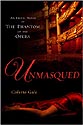
And sometimes, as in the case of our own Colette Gale, the ending of The Phantom of the Opera just can't hold without the real lovers getting together. Colette, of course, writes in a "classics retold" subgenre. Retold and re-eroticized. Or perhaps (this is the fan fiction connection, I think) picking up on hints of eroticism in the original...?

Sometimes the eroticism really is there in the original -- or almost. The first time I read about fan fiction, it was (possibly like Caleb Crain) in the 90s, in the work of literary scholar Constance Penley. I think the word was slash fiction -- though I'm not sure what that meant. But in any case, Penley was gaga (her word) over stories of sex between Kirk and Spock by Star Trek fans. And whereas I don't believe that Gene Roddenberry had intended a sexual relationship, certainly there's an erotic vibe between two polar modes of macho -- Kirk the impetuous and Spock the remote, repressed, and contemplative. Which probably has something to do with the popularity of m-m couplings today (crumpet strumpets who mine this vein, please comment!)

Which brings me to the real reason I'm writing about fan fiction, because what I'm playing with right now is my own retelling of a classic novel -- to tell the "real" story that it's my pleasure to propose that the author was too proper to reveal. Perhaps like Tom Stoppard's Rosencrantz and Guildenstern are Dead -- well, that's a literary and hifalutin example. Or perhaps more like fan fiction. Where are the boundaries?

Boundaries or not, right now for me it's a journey and a challenge. The sex parts are pure pleasure. Righting injustices that I perceive in the original is a delight. Knowing how much to reveal about the "original," ostensible plot is a headache -- because some readers will have read the original and others will not have. I want it to work for everybody.

And I also want to know what you think about this farrago of partially digested ideas. I know that at least one of the crumpets (Celia) has written fan fiction. And that others of you have written m-m erotica and classics retold stories. Readers, what do you think? Writers, what have been your experiences?

Wednesday, May 14, 2008

Scents and Sexuality, Roses and Sweat

My thirteen year old niece, aspiring writer and veterinarian, likes to ask me when I think she'll be old enough to read my books.

I shrug, demur, and tell her it's up to her moms...

Though in truth, I think the very best way to read a sexy book is as a teenage baby-sitter, finding it on the shelf after the kids are asleep and putting it back very very carefully in the exact same spot before the parents get home so that no one will ever ever know you were reading it... I certainly have no fonder hope for my books than that they be read by a generation (or two, if I'm lucky) of breathless baby-sitters.

But don't tell my niece's parents I said that, okay? Anyway, with or without me, one way or another, I have no doubt she'll read my stuff when she's ready for it.

What I really worry about is whether I'm ready for her.

By which I mean that I hope my books aren't too much of a letdown from some of the deeply, brilliantly romantic stuff she's read already.

I mean, how much more moving could any doomed passion be than Severus Snape's lifelong, tormented, ultimately sacrificial love for Harry Potter's mother, Lily?

And I may never have come up with any single detail as hot (in its squeaky-clean way) as the bit from Twilight, the first book in Stephanie Meyer's teen-age vampire series, where the dreamy good teen vampire Edward explains to our very human heroine Bella how he first became attracted to her, in biology class -- which was by her body's unique and particular smell.

In biology class. Of course. Meyer got it dead-on right. There's something wonderfully basic and biological about writing about smells -- it's the immediacy of them, the way that good and provocative smells are part of our animal nature, our preverbal, amoral attunement to what's safe -- or (even better) to what's so captivating and attractive that safety be damned.

And yet smells are also a deeply cultural link to memory and identity. Mothers and their babies can recognize each other's smells. As of course so can lovers.

Smells can be so overpowering that they seem to surround us. Imagine not wanting to lose any of those little atoms you and your lover's bodies are sloughing off, as though you want to short-cut the journey from desire to memory. And actually, if you don't change the sheets after a week or two... In the Japanese director Oshima's astonishing 1976 movie, In the Realm of the Senses, the sex-crazed couple don't allow the brothel housekeeper to clean the room they've spent some weeks in. It's as though they want to create an environment that's as much an extension of their own bodies as possible.

I've used smell in all my books, but perhaps most consciously in The Slightest Provocation, the story of a couple who've been separated for nine years, and who journey back to where they first fell in love. It's a book where memory and desire are intertwined as tightly as I could make them, as in passages like this one, where Mary, my angry, overwrought and very horny heroine, can only get to sleep by means of a combination of masturbation and laudanum (that ubiquitous 19th century remedy of opium dissolved in alcohol):

She swallowed it down, threw off the rest of her clothes, slipped naked below the quilt, and -- quickly and coldly, skillfully and purposefully -- touched herself until she cried out. Until the aching became a burning, a hard white light easing to a warm orange glow, until the trembling stopped and the candle guttered and died and the visions faded, of blazing eyes and strong tapering hands, of pain and anger, disillusionment and rivalry -- oh, and other visions, memories, from youth, of things they’d done and things they hadn’t dared to try. The smell of lemon oil, warm smooth cherrywood surface of a desktop, her face and breasts crushed against it. All subsiding now, to a dull dark red, as though dimly painted upon the velvet insides of her eyelids. Ebbing, waning, flickering. Until she slept.

Or this passage, no doubt unconsciously influenced by Oshima's movie, where my hero Kit thinks happily of sex and song and smells and dirty sheets:

Come live with me and be my love -- an old lyric she’d liked to sing -- words and cadence coming echoing back now, from behind his thoughts. Pastoral, a shepherd’s love song: giddy swain wooing his lady with promises of beds of roses, food served al fresco on silver plates, and absolutely no messes to worry about. Poetry, in a word.
While reality was quite a different matter, especially if you were accustomed to having servants clean up after you. Astonishing, Kit thought, how smelly a linen sheet could become and in how short a time, at least when subjected to such excellent usage as this one had been getting. The odor had been piquant at first; at this moment one might call it “earthy.” Give him and Mary an additional sweaty day or so of pounding each other so delightfully, and the only thing one could honestly call it would be “stinking.”

Come live with me and be my love
And we will all the pleasures prove

On stinking sheet in chilly air . . .

I do smells differently in my forthcoming book, The Edge of Impropriety. And -- finally tired of roses and sweat, of leather and lemon and of the Provencal lavender and rosemary that wafted through my French-set Bookseller's Daughter, I found a new scent. Or a very old one.

But since this post's quite long enough already, you'll just have to come back for my next to find out about this most interesting, evocative, exotic, and ancient of scents.

While right now, I'll turn the discussion over back over to you readers and writers.

What role do you think the portrayal of smells plays in erotic writing? Writers, how have you used it? And readers, got any favorite examples you'd like to share?

Monday, July 23, 2007

Better late than never.

Sorry for the delay in drawing the winner of an early copy of Unmasqued...got a bit caught up in the Harry Potter thing this weekend, but now that I've finished it and caught up on sleep, things are back to normal.

So, I drew the winner from my newsletter subscribers, and I'm happy to announce that
Lynda Coker
has won an early copy of the book!

I'll be in touch with you for mailing instructions, or you can email me at colette at colettegale dot com.

In the mean time, who read Harry Potter this weekend? And what did you think? (No spoilers, please.)

Wednesday, April 25, 2007

An Interview With the Eleven-Year-Old

I do my writing, as I often like to say, in partnership with my inner eleven-year-old. She's the one who contributes the innocence, bravery, curiosity, optimism, and giddy cluelessness, while all I have to do is back her up with a little true-life experience, a twist of syntactical sophistication.

Or so I like to say. In fact, I've said it so often that I was beginning to wonder if it were true.

I take some reassurance, though, from some of the posts on this august blog -- because it seems that many of us began to develop our erotic imaginations during that time spent on the cusp of girlhood and adolescence -- reading, dreaming, giggling, and wondering about The Big Adventure to... er, Come.

Would it really be as fantastic as everybody seemed to think it was? Would it feel a little like we sometimes felt when we and our girlfriends cooed over this or that really cute movie star? Or would it be more like the weirder, scarier scenarios that we (or at least I) only thought about alone in bed at night?

And would it really lead to a happy ever after?

I'm still touched by my memories of all that. When I read romance I'll even tolerate a touch of TSTL in the service of this eager bravado -- I mean, werent we all too stupid to live, before we began... living? (I've found, btw, that my friends who don't typically read romance are much more tolerant of this than big romance readers. Which would suggest that romance readers are smarter about these things -- or perhaps a tad more defensive... but that'll have to be another post.)

In any case, I'm glad to report that I recently got back in touch with my inner eleven-year old, by spending some time with an actual flesh-and-blood one during my recent east coast visit.

Call her Muse. I'd come to sleep on the fold-out futon in her room.

"You and I both have Kate Spade glasses," she observed -- which seemed a good enough way check in before launching into a heated round of speculation about what's going to happen in the forthcoming Harry Potter and the Deathly Hallows (now that Muse's little brother has become such a good reader, they're a two-Harry Potter family; I guess their mom has to wait until the kids are asleep to get a chance to read it).

Muse agreed with me that Snape is really on the good side (I wrote about this last year on my own web page if you want to check it out). And yes, we found that we were also on the same page about how probably one of the Weasleys will die in the show-down with Lord Voldemort (we both think it might be poor, deluded, conformist Percy).

But what about the entirely admirable werewolf Remus Lupin? Muse and one of her girlfriends think he'll also get the axe, because it'll be in keeping with the myth of Romulus and Remus, where Remus dies.

Oh sure, I quickly replied. (Did Remus die in the Roman myth? Well now I know, anyway).

But now that Muse is of the age where she notices things like Kate Spade glasses, Harry Potter isn't really her favorite book anymore. Well, in some ways it still is, but these days it almost doesn't count, perhaps because it's been around for so much of her life and has become sort of like part of the family.

And Muse is starting to think about what's cool and exotic and a little further from home.

About a book about a vampire family, to be exact. I hasten to add that it's a good vampire family, with a gorgeous, moody, teenage son named Edward. Twilight, by Stephenie Meyer, is told by a human teenage girl named Bella who's in love with Edward (who, of course, is actually a lot older than a teenager -- oh, and who's also in love with Bella).

No doubt I've been living in some middle-aged romance-writer cave, but I'd never heard of Twilight, which Muse has read so many times that its (imo fabulous) front cover has fallen off. So the first thing I saw was the table of contents, with Muse's note that "vampires rock." Which was invitation enough for me to gulp down all 400 pages of Twilight during the weekend I spent with Muse and her family (luckily, Muse was busy with New Moon, the next book in the series).

And I'm here to tell you that Stephenie Meyer's vampires most definitely rock. Especially Edward, who for most of the 400 pages barely touches Bella -- so bravely, moodily, heroically concerned is he that he might lose control of his deep and dangerous, wonderful and mysterious and powerful vampire instincts and hurt the human girl he loves.

It's an astonishing performance -- beautifully paced and sweetly sexy in a way that I thought made total sense for a bright, alert reader on the edge of adolescence. And it's swooningly, overwhelmingly romantic, suffused with thrilled fearful anticipation, in a way I'm going to have to think some more about.

Because even though I write explicit stuff about grown up people, I know that I and my characters alike need to keep in touch with that brave yearning young self we all carry around with us.

So thank you Muse, for letting me touch base. And the rest of you out there might want to treat your inner eleven-year-olds to Twilight and its sequels.