Showing posts with label The Slightest Provocation. Show all posts

Wednesday, May 14, 2008

Scents and Sexuality, Roses and Sweat

My thirteen year old niece, aspiring writer and veterinarian, likes to ask me when I think she'll be old enough to read my books.

I shrug, demur, and tell her it's up to her moms...

Though in truth, I think the very best way to read a sexy book is as a teenage baby-sitter, finding it on the shelf after the kids are asleep and putting it back very very carefully in the exact same spot before the parents get home so that no one will ever ever know you were reading it... I certainly have no fonder hope for my books than that they be read by a generation (or two, if I'm lucky) of breathless baby-sitters.

But don't tell my niece's parents I said that, okay? Anyway, with or without me, one way or another, I have no doubt she'll read my stuff when she's ready for it.

What I really worry about is whether I'm ready for her.

By which I mean that I hope my books aren't too much of a letdown from some of the deeply, brilliantly romantic stuff she's read already.

I mean, how much more moving could any doomed passion be than Severus Snape's lifelong, tormented, ultimately sacrificial love for Harry Potter's mother, Lily?

And I may never have come up with any single detail as hot (in its squeaky-clean way) as the bit from Twilight, the first book in Stephanie Meyer's teen-age vampire series, where the dreamy good teen vampire Edward explains to our very human heroine Bella how he first became attracted to her, in biology class -- which was by her body's unique and particular smell.

In biology class. Of course. Meyer got it dead-on right. There's something wonderfully basic and biological about writing about smells -- it's the immediacy of them, the way that good and provocative smells are part of our animal nature, our preverbal, amoral attunement to what's safe -- or (even better) to what's so captivating and attractive that safety be damned.

And yet smells are also a deeply cultural link to memory and identity. Mothers and their babies can recognize each other's smells. As of course so can lovers.

Smells can be so overpowering that they seem to surround us. Imagine not wanting to lose any of those little atoms you and your lover's bodies are sloughing off, as though you want to short-cut the journey from desire to memory. And actually, if you don't change the sheets after a week or two... In the Japanese director Oshima's astonishing 1976 movie, In the Realm of the Senses, the sex-crazed couple don't allow the brothel housekeeper to clean the room they've spent some weeks in. It's as though they want to create an environment that's as much an extension of their own bodies as possible.

I've used smell in all my books, but perhaps most consciously in The Slightest Provocation, the story of a couple who've been separated for nine years, and who journey back to where they first fell in love. It's a book where memory and desire are intertwined as tightly as I could make them, as in passages like this one, where Mary, my angry, overwrought and very horny heroine, can only get to sleep by means of a combination of masturbation and laudanum (that ubiquitous 19th century remedy of opium dissolved in alcohol):

She swallowed it down, threw off the rest of her clothes, slipped naked below the quilt, and -- quickly and coldly, skillfully and purposefully -- touched herself until she cried out. Until the aching became a burning, a hard white light easing to a warm orange glow, until the trembling stopped and the candle guttered and died and the visions faded, of blazing eyes and strong tapering hands, of pain and anger, disillusionment and rivalry -- oh, and other visions, memories, from youth, of things they’d done and things they hadn’t dared to try. The smell of lemon oil, warm smooth cherrywood surface of a desktop, her face and breasts crushed against it. All subsiding now, to a dull dark red, as though dimly painted upon the velvet insides of her eyelids. Ebbing, waning, flickering. Until she slept.

Or this passage, no doubt unconsciously influenced by Oshima's movie, where my hero Kit thinks happily of sex and song and smells and dirty sheets:

Come live with me and be my love -- an old lyric she’d liked to sing -- words and cadence coming echoing back now, from behind his thoughts. Pastoral, a shepherd’s love song: giddy swain wooing his lady with promises of beds of roses, food served al fresco on silver plates, and absolutely no messes to worry about. Poetry, in a word.
While reality was quite a different matter, especially if you were accustomed to having servants clean up after you. Astonishing, Kit thought, how smelly a linen sheet could become and in how short a time, at least when subjected to such excellent usage as this one had been getting. The odor had been piquant at first; at this moment one might call it “earthy.” Give him and Mary an additional sweaty day or so of pounding each other so delightfully, and the only thing one could honestly call it would be “stinking.”

Come live with me and be my love
And we will all the pleasures prove

On stinking sheet in chilly air . . .

I do smells differently in my forthcoming book, The Edge of Impropriety. And -- finally tired of roses and sweat, of leather and lemon and of the Provencal lavender and rosemary that wafted through my French-set Bookseller's Daughter, I found a new scent. Or a very old one.

But since this post's quite long enough already, you'll just have to come back for my next to find out about this most interesting, evocative, exotic, and ancient of scents.

While right now, I'll turn the discussion over back over to you readers and writers.

What role do you think the portrayal of smells plays in erotic writing? Writers, how have you used it? And readers, got any favorite examples you'd like to share?

Monday, April 21, 2008

A New Book, a Contest, a Dumb Mistake and Two Funerals

It sounds like a movie with Hugh Grant in it, but it's actually a description of the month, more or less, that I've more-or-less just finished living through.

Because you may remember that at the end of February, I first posted the lovely cover of my November novel, The Edge of Impropriety, accompanied with some jittery prose to the effect that I was waiting nervously for my editor's instructions on how to revise the manuscript.

Now I'm not averse to criticism of my writing. I wouldn't say I actually enjoy it, but I do appreciate it.

I mean, computer programmers (which I was, for 25 years) don't whine and get all insulted when someone finds a bug in their code, do they? Au contraire, they're happy and grateful someone found the problem before the program went live and plunged the whole wide wired world into silent darkness.

So it's not the editorial tough love that bothers me. What makes me nuts is waiting to find out what bugs and glitches and just downright doesn't-work moments an editor has found in my manuscript. It's the waiting that gets me pacing the floor and biting my nails.

Cool it, I told myself. You have stuff to do.

Because I needed to post a new contest on my web page -- one of those read-an-excerpt-answer-a-question-enter-the-drawing-to-win-a-prize contests.

The prize would be an autographed copy of The Slightest Provocation, and I figured I'd make it a sexy contest, using the passage wherein my hero and heroine, Mary and Kit, play a sexy game wherein a pirate ravishes his captive lady.

Am I the only historical erotic author, btw, who portrays her characters sharing erotic fantasies?

I mean, don't the characters in erotic historicals already
live in costume fantasyland?

Isn't it the
reader who's supposed to be having the fantasies?

I'm probably not the only author who creates such scenes in her books. But I might be the only one who gets herself tied up into TheoryGirl knots by mulling over the meta of these meta-questions, instead of keeping her mind on the html as she constructs a web-based contest whose question asks, "In The Slightest Provocation, what does Mary wear for a hot, silly, rough-and-tumble game of pirate-and-lady?"

When I wasn't tying myself into knots worrying about what changes my editor would want me to apply to the manuscript of The Edge of Impropriety.

And I may be the only romance author (who are, by and large, a frighteningly competent, productive bunch) who got so distracted that she forgot to put the pirate excerpt up, leaving an entirely different excerpt, about a much younger Mary and Kit -- who were much too young to play pirate (at least the kind of pirate game I had in mind).

Or perhaps it was because I was interrupted by an aunt's sudden death and had to grab a red-eye flight to go East for the funeral.

I was glad I went, though. My family pulls together in hard times and I was glad to add my support.

When I got back home from the funeral, my editor's revision instructions had arrived. Smart ones. Thoughtful ones. Tough ones.

Oh, and could I turn it around in a little less than three weeks?

None of which left me much time to pay attention to the fact that no one who'd entered my contest seemed to know what Mary was wearing to play pirate.

I did make the changes to the manuscript, though the only time I got out of my pajamas during those weeks might have been the afternoon I delivered my talk to the Popular Culture Association -- with the help of two of the avatars who live in the mad attic of my brain, TheoryGirl and SuperegoGirl (that's TheoryGirl in the pic -- SuperegoGirl is camera-shy).

I wish, by the way, that I could have heard the other talks at the Popular Culture conference. If you're interested in romance scholarship, please check out Sarah Frantz's discussion here.

But I did made the changes to The Edge of Impropriety in the time assigned. And even had a little fun when I added a whole other sex scene (about which, more later).

And had a moment to enjoy the email from my editor saying she liked what I'd done...

...just in time to go East for yet another funeral.

But not in time to notice that there was still hardly any response to my contest question.

Until I got home from Funeral Two last week, to find a sweet, patient smart letter from a reader who was kind enough to clue me into the fact that there was nothing in the excerpt on my web page that would possibly tell anyone what my poor heroine was wearing to play sexy grownup pirate (because the excerpt that was still on my page had her as a twelve-year-old in pigtails and pinafore).

So apologies to all you contest freaks out there. Please come play -- it's fixed now -- while I take a long, red-faced nap.

As for the questions...

One of which you'll find on the contest page of my web site.

Except for those of you who like to mull, as I do, about the boxes-within-boxes paradoxes of characters in erotic romance novels who have their own erotic romance fantasies... Those of you who never met a metastructure they didn't like... I'd love to hear your thoughts too.

Monday, April 16, 2007

Are We Having Sex Yet?

There was an interesting post a few weeks ago, on the review and discussion web site DearAuthor.com, about whether there's a room in romance fiction for the extravagances of style we tend to associate with "literary" fiction - or whether romance readers prefer (and romance writers ought to be content to achieve) a narrative that’s clear, clean, and quick to deliver the goods. I recommend the discussion (and I was delighted to have a few lines from The Slightest Provocation chosen as one of their examples of lyrical description in romance).

But I prefer to think about these matters a bit differently. I mean of course I'm of the opinion that romance ought to be rich enough to comprise any damn kind of writing an author wants to try her hand at - aren't love and sex big and important enough to be approached from like a gazillion angles? But I'd like to take the discussion beyond the craft of description. Because taking time out from fast-moving narrative structure isn't just a matter of "literariness" or lyricism.

It's about trying to write about time itself. And for me, it’s also usually a way of writing about sex - which is, I think most of us would agree, a matter of timing.

So it makes sense that writing about sex has got to be a matter of knowing when to take your time and when to hurry. And writing a sexy romance is about finding or creating the style that catches the rhythm you need.

...there aren't enough tenses for all this to happen in, the past and the present fragmenting as they bop off one another...
This line - from a wonderful poem called "Erotikon" in a book of the same name by Susan Mitchell - expresses one of my core credos and favorite conundrums about sex: that it's never completely in the present or in the past. Because every moment in the present was once in the future and soon enough will become the past. Because how can anybody know exactly when anticipation becomes experience or experience becomes recollection (and how can any writer resist trying to pin it down)? And because when you're paying attention to each moment, when you're living it intensely and in the round (so to speak), your time sense gets confused, enchanted, or bent into new and surprising shapes.

I've been musing and meditating on this sort of stuff for most of my adult life - or at least since my late teens, since I first read T.S. Eliot's "The Wasteland."

Well, I sort of read it. I mean I didn't read it all the way through to the end that first time; I stumbled and got lost among the weird arcane references. And anyway, I didn't see any point in going further when I was already so knocked out by those famous opening lines:
April is the cruellest month, breeding
Lilacs out of the dead land, mixing
Memory and desire, stirring
Dull roots with spring rain.
Being in the April of my own young adulthood at the time, I knew that "cruel" was exactly right for what I was feeling. And that although "stirring/ Dead roots with spring rain" almost hurt to read and think about, it was the good kind of hurt I was learning to recognize as "desire" (and to begin to consider how yearning is the flip side of remembering what you've lost, cherished, or almost forgotten).

So at least that first time I gave up on whatever Eliot was trying to tell me about European culture and mythology, and went back and read and reread about April and the lilacs and the spring rain about a hundred more times.

After which (well many years after which, and having dutifully finished reading and even sort of understanding the hard parts of "The Wasteland") I became a writer of erotica and erotic romance - a job that demands, imo, a constant state of itchy confusion about the linked mysteries of memory and desire, and of attention to verb tenses that have to be tweaked and stroked until they signal the sneaky permeability of the erotic past, present and future tenses. Not to speak of the conditional, past perfect, imperfect, and the subjective… because I also sometimes wonder if French came to be called the language of love because of the exquisite care their writers pay to all those shifts in tense and mood. Though of course there are also the strange and exotic things that speaking French does to your mouth and throat...

…which would be a different discussion. For some other time, perhaps.

But meanwhile, I’d love to know if anybody else out there thinks about these issues, and what they mean (or don't) for that narrative arc so critical to genre fiction.

Monday, March 26, 2007

Dazed and confused

A short and appallingly self-involved post from me today.

But I have an excuse. Because on Sunday I got a phone call telling me that The Slightest Provocation was nominated as a finalist for the RITA, in the long historical category.

(Which, if you don't know, is Romance Writers of America's peer-judged industry award for published authors. There's lots more information about the RITA, and the Golden Heart (for unpublished authors) at the RWA Web Site, including the categories and all the finalists. And there's also a thought-provoking critique and discussion (hundreds of comments) of the RITA at Smart Bitches.)

And no, I didn't expect it.

I mean, yes I know that a nominee is supposed to say that she didn't expect it. But you'll have to believe me in this case. In fact, Jane Lockwood can attest to the fact that I made her promise not to tell a soul until I vetted the call from the very kind and intelligent-sounding woman who said she was an RWA board member, but you never know...

...because part of me really did believe that it was all a hoax, dreamed up by the popular girls in my high school, who had (I imagined) maintained contact through the decades while they took their time perfecting the dastardly plan of impersonating an RWA board member and calling me at 1:00 PM EST, March 25, 2007.

Which definitely sounds more than a little bit insane and paranoid, as I read it over now. But high school never quite ends for some of us.

In any case, I plead guilty to being insane and paranoid, giddy, surprised, and astonishingly happy and thrilled. On Sunday I filled the kitchen with smoke when I burned lunch; we figured we'd be safer getting out of the house, walking on the beach, going to see a matinee of Music and Lyrics (very charming, I'm a sucker for underachiever heroes) and eating dinner out.

And while I haven't burned anything today and am capable at least of blogging -- concentrating on the the book I'm currently writing still feels a bit beyond me. Who knew that a RITA nomination would feel sort of like those times one is prepping for or recovering from a minor medical procedure and gets to lie around eating soft food and watching DVDs of Rome?

Which I just might do...

I'll come up with a real post next time, I promise!! But right now you must excuse me while I collapse into another fit of unseemly giggles, superfluous exclamation points, and entirely self-indulgent ellipses...

Tuesday, February 6, 2007

Past and Present, Hide and Seek

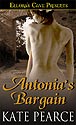
After posting my own face as avatar in my first responses to Celia's post, I’ve beaten a hasty retreat, back behind the ambiguous smile of my cover girl for The Slightest Provocation. Because I’ve rather belatedly realized that I’m the only author on this group blog to be posting under my erotic-romance-writing name, which is also my own, everyday name of Pam Rosenthal. All of which, in the context of this frank, clever, trash-talking blog, makes me want to reach for the nearest mask or figleaf.

Funny how all that works.

And, no - in case there might be any doubt - I didn’t choose to publish erotic romance as “Pam Rosenthal” because I thought the name conveyed that sexy Brit resonance so often coveted for romance writer pseuds.

The story's simpler. By the time I got published in writing erotic romance I’d been writing my down and dirty literate smut as Molly Weatherfield, and it felt like time to get a little credit under my own name. (Or, more correctly, the name I'd come by via Michael Rosenthal, after meeting several eons ago, during the summer of Bob Dylan’s Blonde on Blonde and the Grove Press translation of Story of O.)

I’m a slow reader, a slow writer, and a slow learner. Unlike some of you precocious young things, I was well past adolescence when I turned to erotic writing. In fact, by the time of my first story, Michael and I were ourselves the parents of an adolescent much given to rolling his eyes in extravagant, desperate humiliation whenever I'd sing along with the girl groups on oldies radio.

More than two decades had drifted or hurtled by since the hot Manhattan summer of Michael and I reading Story of O together in that hard single bed we found so roomy and comfy. By now we had a bigger bed, jobs, responsibilities, a big mortgage on a tiny San Francisco Victorian, and that eye-rolling offspring.

But that morning had been a particularly lazy, sexy, sunny Sunday. Michael hadn't gone off to work at his bookselling job until eleven. After which I had decided that it might be fun, interesting, at least therapeutic and certainly better than housework, to curl up in a chair in the bay window and jot down a few of the secret, outré, long-cherished S/M fantasies that had passed through my head in the prior hours.

Several hours passed, quite imperceptibly. Sunday morning became Sunday afternoon and I was still in my ratty old pink terrycloth bathrobe. The only time I’d gotten up was to consult the bookshelves, to check the punctuation of COMMA CLOSE QUOTE HE SAID PERIOD. Because there were real characters speaking real dialog on the page before me. I felt like God. There was no going back.

I finished the story and sent it to a local zine I admired, “Frighten the Horses,” which had recently published a hot and beautifully crafted poem by Kim Addonizio (check her out if you don’t know her work).

Maybe six months later I received what I now recognize as a wondrously generous, helpful, and encouraging page-long rejection letter from the zine’s editor, erotic writer Mark Pritchard (also a fine writer, and now a friend – check him out too). Mark wrote that while I’d produced an unusually well written first attempt at a story, I clearly didn't understand much about what a story actually was; patiently, he suggested that something - perhaps transformative or revelatory - usually happens in a story. I, of course, thought he was a fatuous idiot, cried a lot, and tried to forget the whole thing.

Except that I didn’t. Couldn’t. Partly because I was lucky enough to be living in San Francisco’s Mission District during a wonderfully creative queer and feminist-inspired efflorescence of erotic culture (this was the early 90s – more about all that in my next post). And partly, simply (simply!) because erotic fiction-writing had been so much fun (it was never very therapeutic; the first thing I learned is that it shouldn't be).

But the fun is what I hope will always remain. Which makes me think I’ve come to the right tea party. I like my tea green, by the way. As green as I was when I started that first story. May I always be able to find my way back to that moment of innocent bravery.

Later,
Pam